Style 01 · Rendered dread, built from real anatomy — not costume-shop shorthand.
Horror
Realism
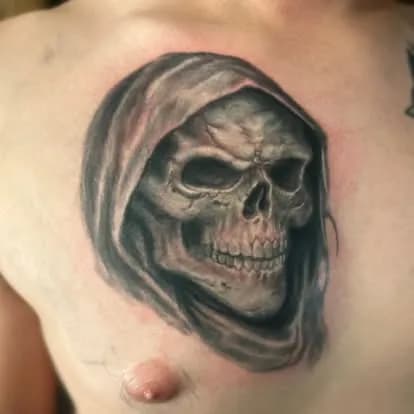
Horror realism is rendered dread. It is built from real anatomy, real light and real material — bone, sinew, wet surface, torn edge — and it earns its unease by being correct, not by being loud. Nothing here is a Halloween prop. The subject is drawn the way a medical illustrator would draw it, then lit the way a cinematographer would light it.
The discipline
What separates good from bad.
The failure mode of this style is decoration: a skull outlined in black, a spatter of red, and nothing underneath. We build the form first in value, hold the darkest darks in reserve, and let the highlights do the frightening. If the piece does not read as a solid object at arm's length, it is not finished.
Photographed
On skin.
Fit
Who it suits.
Subject matter
Anatomical subjects, creature and figure work, decay and texture studies, narrative pieces with a single dominant focal point.Skin tone
Works across the full range. On deeper skin tones we widen the value gaps and lean on shape and silhouette rather than fine grey transitions, which is a drawing decision made at stencil stage, not a limitation.Scale
Wants room. Below roughly a palm-width the detail that makes it horror stops resolving and it becomes a black shape. Forearm, calf, thigh and back panels are where it lives.Who it is for
People who want the piece to be unsettling ten years from now, and who are willing to sit long enough to get the rendering right.
Placement
Where it lives.
Outer forearm
The reference placement. Flat, visible, holds detail well and heals predictably.Calf
Nearly as stable as the forearm with more vertical room for a full figure.Upper back / shoulder blade
Large uninterrupted panel for narrative work. Requires a second pair of eyes at placement approval since you cannot see it in the mirror.Thigh
Most forgiving surface for long sittings and the easiest large area to aftercare properly.
What to expect
How it gets built.
01
Reference is not optional
Bring anatomical reference, not mood boards alone. A found photograph of the actual structure beats ten stylised drawings of it.02
Value pass before detail pass
The first session establishes the full value structure across the whole piece. Detail and texture come after, once the base has healed and settled.03
Multi-session by default
Anything above forearm scale is planned as more than one sitting. Your session count and the reasoning behind it are given at consultation, before any money moves.
Horror Realism